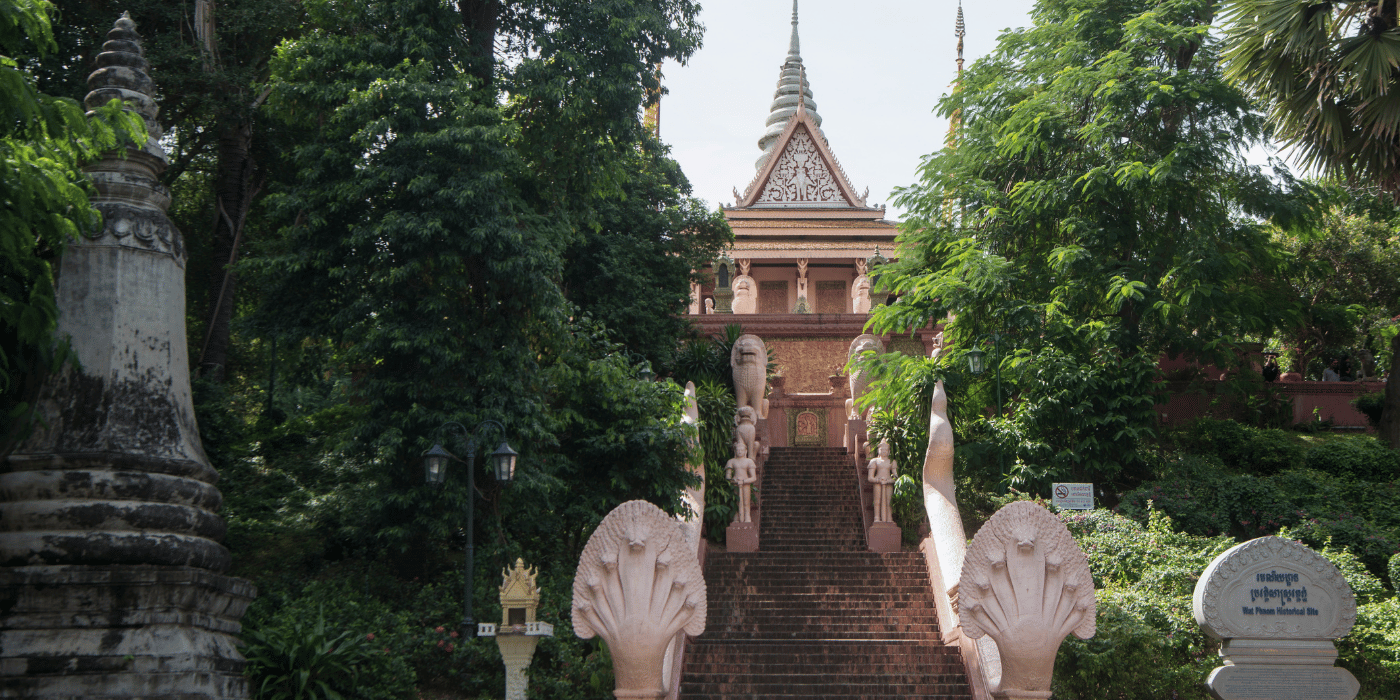
Wat Phnom is the Heart of Phnom Penh!
By Vimean Soksan · December 22, 2025 · Top Place to Visit
A Symbol of the City’s Origin
Wat Phnom Temple is one of the most important and iconic landmarks in Phnom Penh. Closely tied to the founding legend of the Cambodian capital, this sacred hilltop temple stands as both a historical and spiritual symbol for the city.
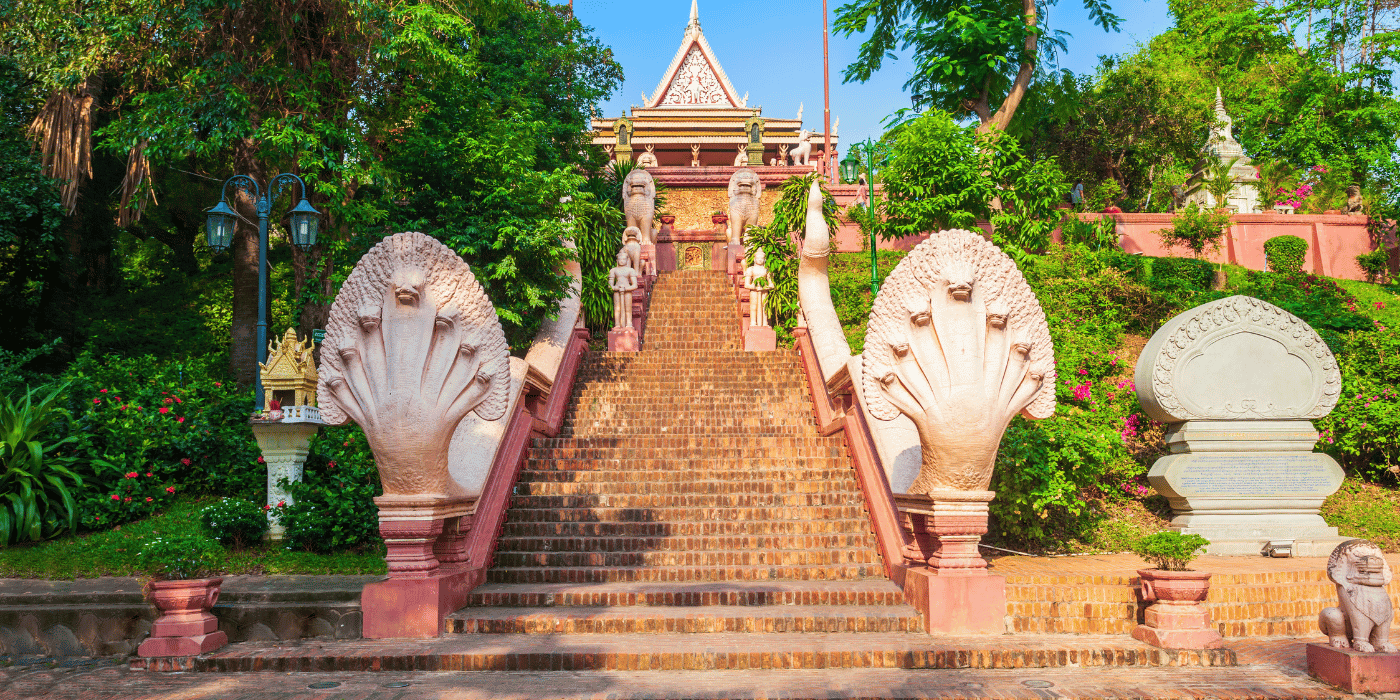
According to legend, Wat Phnom was established in 1372 by a wealthy widow named Daun Penh (Grandmother Penh). One day, after a heavy rainstorm, she discovered a floating koki tree in the nearby river. Inside the tree were four bronze Buddha statues and one stone statue of a goddess. Seeing this as a divine sign, Daun Penh gathered her neighbours and built a small shrine on an artificial hill, 27 meters high, to enshrine the sacred images.
This hill became known as Wat Phnom Daun Penh, literally meaning “the Hill of Lady Penh.” Over time, the site grew in significance and became a place where locals would come to pray for blessings, good fortune, and success.

Historical Significance and Renovations
The original shrine was later expanded into a grand temple that has undergone several restorations, notably in 1434, 1806, 1894, and 1926. Each renovation enhanced the beauty and prominence of Wat Phnom, making it one of the most well-preserved religious monuments in Phnom Penh.
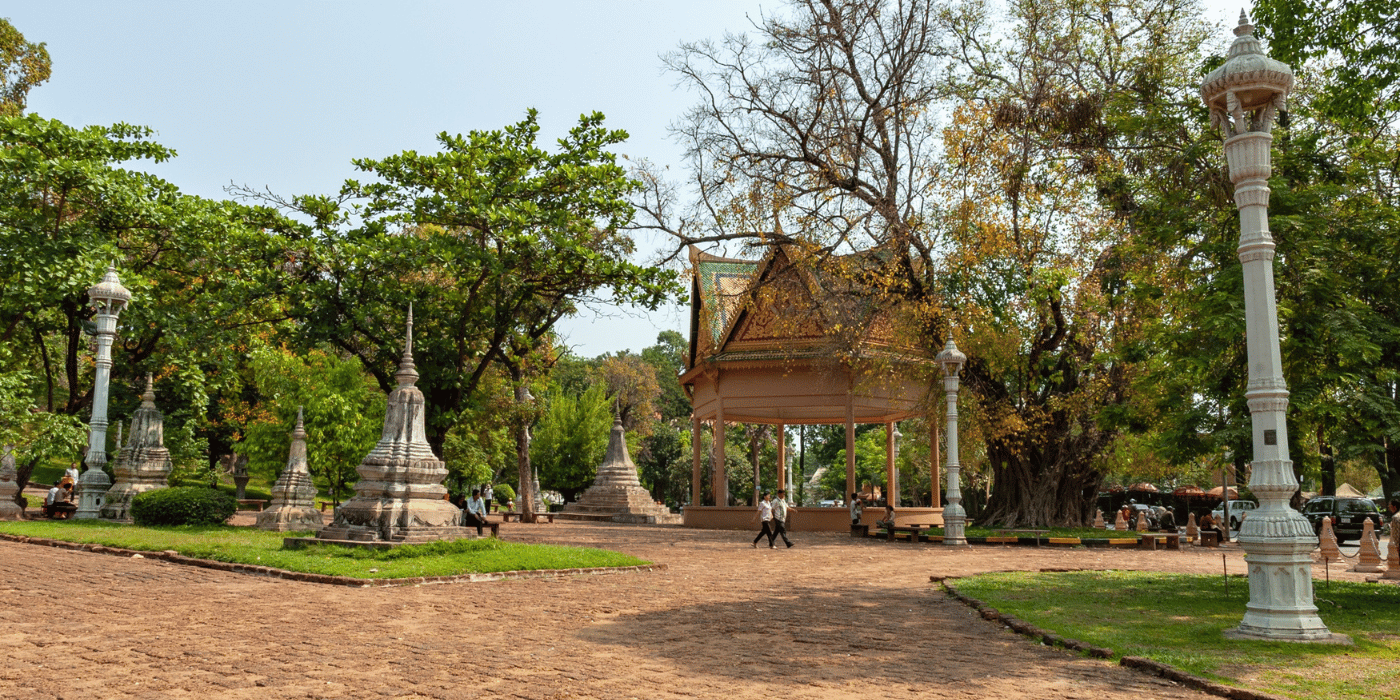
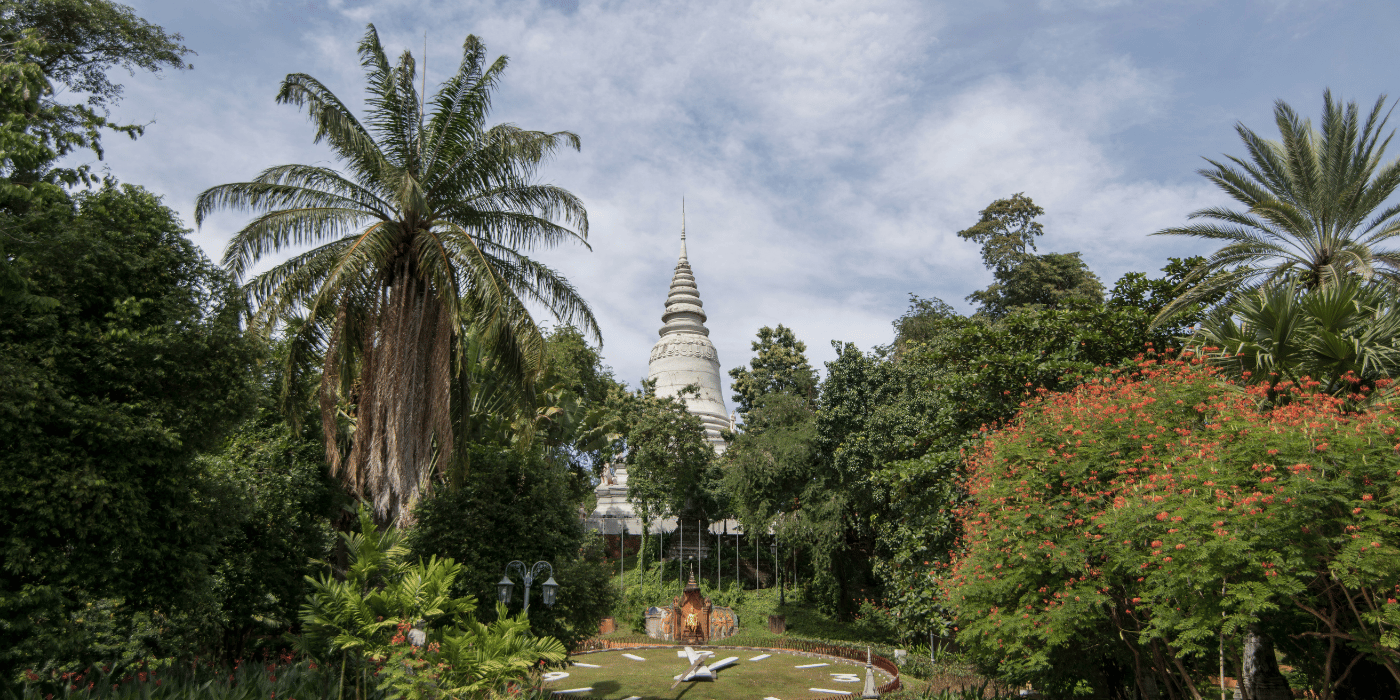
Within the temple grounds, visitors can also see the large stupa of King Ponhea Yat, who relocated the Cambodian capital to Phnom Penh in 1434. His ashes are enshrined within this stupa, adding even more historical importance to the site.
Statue of King Sisowath at Wat Phnom
A Monument of National Pride:
Wat Phnom holds not only legendary significance but also a rich historical legacy that dates back to the 14th century, when Phnom Penh was founded. One of the most remarkable landmarks found at the southern foot of Wat Phnom is the statue of King Sisowath, a powerful symbol of Cambodia’s resilience and national unity during the era of French colonial rule.

The statue commemorates King Sisowath (reigned 1904-1927), who ascended the throne in 1906 AD, at the age of 64, following the death of King Norodom. Before his coronation, King Sisowath was a brave military general who led Cambodian forces against rebellions between 1861 and 1884. Revered by his people for his generosity, compassion, and sense of justice, King Sisowath became one of the most respected monarchs in Cambodian history.
During his reign, he devoted himself to education, religion, and cultural development. Among his notable achievements were the founding of Sisowath High School, the Royal Library, a Pali school for Buddhist studies (Preah Trai Bekdok), an art school, a law school for civil servants, and the National Museum, which continues to preserve Cambodia’s cultural heritage today.
The Franco-Siamese Treaty and Symbolism:
The statue of King Sisowath also symbolises Cambodia’s territorial reunification. In 1907, under the Franco–Siamese Treaty, the provinces of Battambang, Siem Reap, and Sisophon were returned to Cambodian control from Siam (modern-day Thailand). This historic event is immortalised in the design and inscriptions found on the monument.
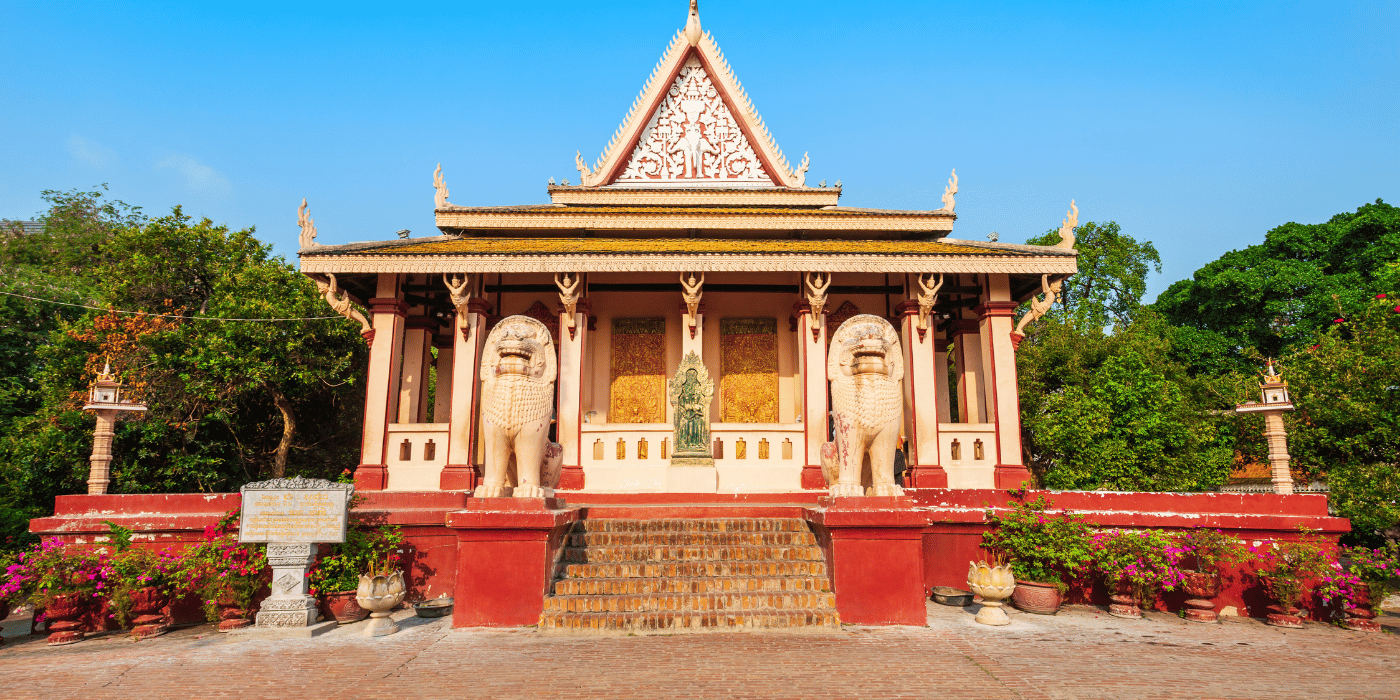
Originally cast in 1909 from copper-based metals, the statue features intricate details that reflect both Cambodian and French influences. On its left side are the engraved letters “RF” (République Française), representing the French Republic, and a depiction of a French soldier holding the national flag in blue, white, and red.
Beneath this inscription appears an engraved image of Doroso de Consula, the French consul of Battambang in 1903 (based on historical records from Mr Touch Chhoung). The statue’s base is adorned with elephant heads and a royal throne decorated with three-headed Nagas. King Sisowath is depicted seated under a nine-tiered royal umbrella, signifying his sovereignty and divine blessing.
On the right side of the monument stand three female figures offering censers to the King. The first woman, dressed like an Apsara, represents Siem Reap; the second and third symbolise Battambang and Sisophon, respectively. Their traditional attire reflects the cultural connections between Cambodia and Siam at that time.
Restoration and Modern Replica:
The statue seen today at Wat Phnom is not the original. The original bronze statue was safeguarded at the National Museum of Cambodia by the Archaeological Conservation Department after the events of March 18, 1970. The current replica, made of cement, was installed in January 1998 under the direction of the Phnom Penh Municipality.

Visiting Wat Phnom Today
Today, Wat Phnom remains a serene and culturally rich destination for both locals and tourists. Surrounded by lush greenery, the temple complex offers a peaceful retreat from the city’s hustle and bustle. Locals often come to make offerings, light incense, or release birds as a symbol of good luck.
At night, the temple is beautifully illuminated, providing a striking view over central Phnom Penh. Whether you’re drawn by its history, architecture, or spiritual charm, Wat Phnom is an essential stop for anyone exploring Cambodia’s capital.
How to Get to Wat Phnom & Entrance Fees
📍 Location & Transportation:
Location: Street 96, Norodom Boulevard, Phnom Penh, Cambodia
Wat Phnom is located right in the heart of Phnom Penh, just north of the Royal Palace and a short distance from the riverside area. It’s one of the city’s most accessible landmarks, making it easy to include in a walking or tuk-tuk tour of central Phnom Penh.
How to Get There:
- 🚖 By Tuk-Tuk: The most popular and convenient option. A ride from the city centre, Riverside, or BKK1 area costs around $2–$5 USD, depending on distance and negotiation.
- 🚲 By Bicycle: Ideal for travellers who enjoy exploring at their own pace. Many hotels and guesthouses offer bike rentals. It’s an eco-friendly and enjoyable way to get around.
- 🚶♀️ On Foot: Wat Phnom is just a 10–15 minute walk from the Royal Palace, Sisowath Quay, or Central Market, making it easy to reach if you’re staying nearby.
💵 Entrance Fee & Opening Hours:
- Entrance Fee: $1 USD for foreign visitors (free for Cambodian citizens)
- Opening Hours: 7:00 AM – 6:30 PM, open daily
Pro Tip: Visit early in the morning or late in the afternoon to avoid the midday heat and large tour groups. The cooler hours also provide the best light for photos and a peaceful atmosphere for exploring the temple grounds.
🌿 Top Things to See & Do at Wat Phnom
Wat Phnom isn’t just a temple; it’s the spiritual heart of Phnom Penh, filled with legends, art, and living traditions. Whether you’re a history lover, photographer, or casual traveller, this sacred hill offers plenty to explore:

🙏 Discover the Shrine of Lady Penh (Daun Penh):
Near the base of the hill, visit the shrine dedicated to Lady Penh, the legendary founder of Phnom Penh. Locals frequently come here to offer incense, flowers, and fruit, praying for good fortune, health, and success. It’s a deeply cultural spot where visitors can experience authentic Cambodian spirituality firsthand.
🛕 Explore the Majestic Temple Complex:
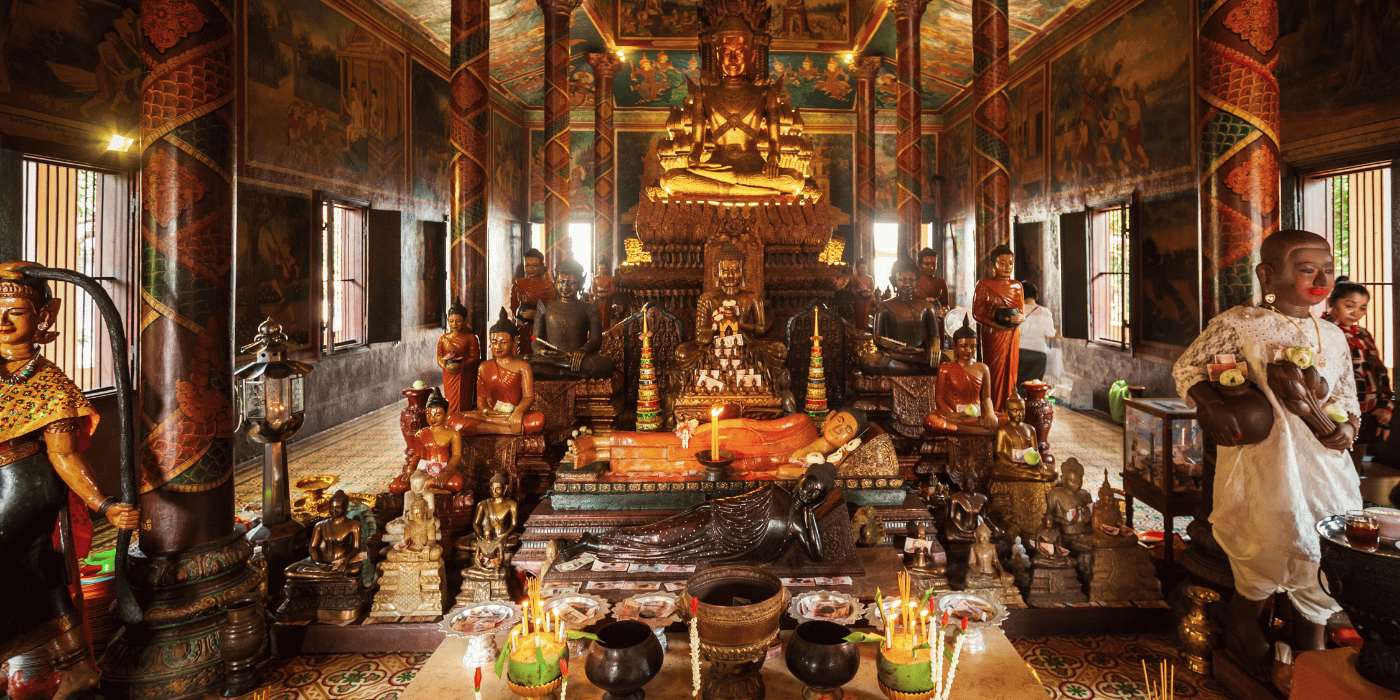
Climb the grand staircase guarded by mythical Naga (serpent) balustrades, a hallmark of Khmer architecture. At the top, you’ll find the main stupa, which enshrines ancient Buddha statues and is surrounded by vibrant murals illustrating the Jataka tales, stories that recount the past lives of the Buddha. The serene atmosphere and intricate details make this the centrepiece of Wat Phnom.
🕯 Witness Local Rituals & Blessings:
Wat Phnom is an active place of worship where visitors can observe or participate in traditional Buddhist rituals. Locals light incense, tie blessing strings, and make offerings for prosperity. If you’re lucky, a monk may offer you a sacred red bracelet symbolising good luck and protection, a memorable cultural experience.🌸 Admire the Colourful Pagodas & Gardens:

The temple grounds are a peaceful green oasis amid the city’s hustle. Wander through smaller pagodas and shrines, admire the colorful statues, and relax under the shade of towering trees. You might spot monkeys, squirrels, and tropical birds a delightful surprise in the heart of Phnom Penh!
🌆 Enjoy Panoramic Views of Phnom Penh:
From the hilltop, enjoy a 360-degree panorama of Phnom Penh’s skyline, with views stretching to the Tonlé Sap River, Royal Palace, and the city’s growing cluster of skyscrapers. It’s especially beautiful during sunrise or sunset, when soft golden light bathes the temple and city below.
☀️ Best Time to Visit Wat Phnom
Timing your visit to Wat Phnom can make a big difference in your experience. Here’s when to go for the best weather, atmosphere, and photos:

🌤 Cool Season (November – February):
This is the best time of year to visit Phnom Penh. Temperatures range from 25 - 30°C, offering pleasant weather for climbing the hill and exploring the temple grounds. The skies are clear, the gardens are lush, and the overall atmosphere is perfect for sightseeing.
🌅 Early Morning or Late Afternoon
If you want to avoid the heat and crowds, visit early in the morning (7:00–9:00 AM) or late in the afternoon (4:30–6:00 PM). The soft light during these times also provides great conditions for photography, especially for capturing the temple’s golden hues.
🎉 Khmer New Year (April):
During the Khmer New Year, Wat Phnom becomes a lively centre of activity. Locals gather here to celebrate with traditional games, offerings, and water blessings. It’s a colourful and festive time to experience Cambodian culture firsthand, though it can get quite busy!
🌧 Rainy Season (May – October):
While the rain brings cooler air and greener scenery, the paths around Wat Phnom can get slippery after downpours. If you visit during this period, bring an umbrella, wear comfortable shoes with good grip, and plan your visit between showers.
🎒 Final Travel Tips for Visiting Wat Phnom
Before you make your way to Phnom Penh’s most iconic temple, keep these simple yet important tips in mind to ensure a smooth and respectful visit:
👕Dress Modestly: As Wat Phnom is an active religious site, it’s important to dress respectfully. Cover your shoulders and knees, and avoid revealing or tight-fitting clothing. Light, breathable fabrics are best for Cambodia’s warm climate.
💰Bring Small Change: Carry a few small bills or coins (in USD or Cambodian riel) for donations, offerings, or incense purchases. Many locals and monks appreciate small contributions, which go toward temple upkeep and community activities.
🎒Beware of Pickpockets: While Wat Phnom is generally safe, the surrounding park area can attract petty theft. Keep an eye on your bags, phones, and cameras, especially during crowded times or festivals. A small crossbody bag or money belt is a smart choice.
🙏Respect Local Customs: Show respect for Cambodian traditions by removing your shoes and hat before entering any shrine or sacred area. Keep your voice low, avoid pointing your feet toward Buddha images, and ask before taking photos of monks or worshippers.✨Pro Tip: Combine your visit to Wat Phnom with nearby attractions like the Royal Palace, National Museum, and Central Market for a full day of cultural exploration in Phnom Penh.
🏙️ Nearby Attractions You Can’t Miss
After exploring Wat Phnom, take some time to discover a few of Phnom Penh’s other must-see attractions, all located just a short ride away. Each site offers a unique glimpse into Cambodia’s rich culture, history, and modern charm:

🕊️Independence Monument: Located at the intersection of Norodom and Sihanouk Boulevards, the Independence Monument is one of Phnom Penh’s most recognisable landmarks. Built in 1958 to commemorate Cambodia’s independence from France, the monument’s lotus-shaped stupa is beautifully illuminated at night. It’s a popular stop for photos and a symbol of the nation’s enduring pride.
🏺National Museum of Cambodia: Just a few minutes from Wat Phnom, the National Museum of Cambodia is home to an incredible collection of ancient Khmer sculptures, religious relics, and archaeological treasures. Don’t miss the exhibits from the Angkorian period, which showcase Cambodia’s artistic and cultural brilliance. The museum’s tranquil courtyard and traditional red-roof architecture make it a peaceful spot to unwind after sightseeing.
🕯️Tuol Sleng Genocide Museum (S-21 Prison): A visit to the Tuol Sleng Genocide Museum offers a deeply moving look into Cambodia’s tragic past under the Khmer Rouge regime. Housed in a former high school turned prison, the museum documents the stories of those who suffered during the late 1970s. It’s a sobering yet essential stop for anyone seeking to understand Cambodia’s resilience and history.
🛍️ Central Market (Phsar Thmei): Located in the heart of the city, Central Market, known locally as Phsar Thmei, is a shopper’s paradise. Its iconic Art Deco dome, built in 1937, houses hundreds of stalls selling souvenirs, jewellery, clothing, handicrafts, and local snacks. It’s also a great place to experience the vibrant daily life of Phnom Penh.
✨Travel Tip: All these attractions are within (10 - 15 minutes) of Wat Phnom by tuk-tuk or bicycle, making it easy to explore them in a single day or weekend itinerary.
🌄 Final Thought: Wat Phnom, A Must-Visit in Phnom Penh
From its legendary origins to its peaceful atmosphere, Wat Phnom is far more than just a temple; it’s the spiritual heart and enduring symbol of Phnom Penh. This sacred hill blends myth, history, and faith, offering every visitor a deeper connection to Cambodia’s rich cultural soul. Whether you’re a history enthusiast, a spiritual seeker, or simply looking for a quiet retreat in the bustling capital, Wat Phnom invites you to pause, reflect, and rediscover serenity. Each step up its leafy path tells a story of Daun Penh’s devotion, ancient Khmer kings, and the resilient spirit of the Cambodian people.
📸 Ready to explore? Pack your camera, wear comfortable shoes, and make your way up the hill of Wat Phnom, where history, culture, and adventure beautifully come together in the heart of Phnom Penh.